A second brain for what you read

Read less. Remember more.

Papers in your field come down to 30-second summaries — and your saves, notes and lists become one library across phone and web.

250M+ searchable papersQ1–Q4 · SJR · FWCI quality signalsTR · EN summary languages0 ads and tracking cookies
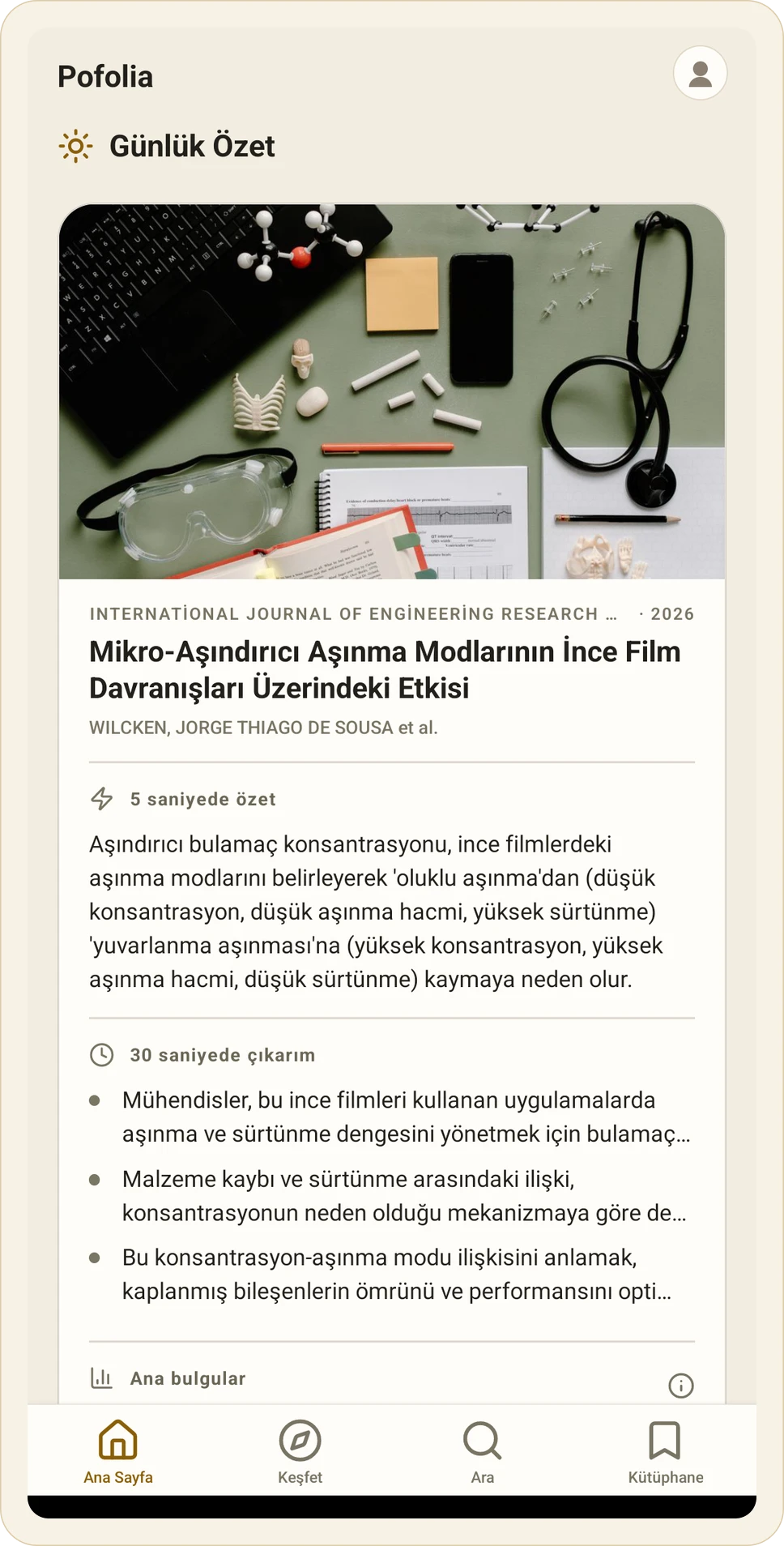
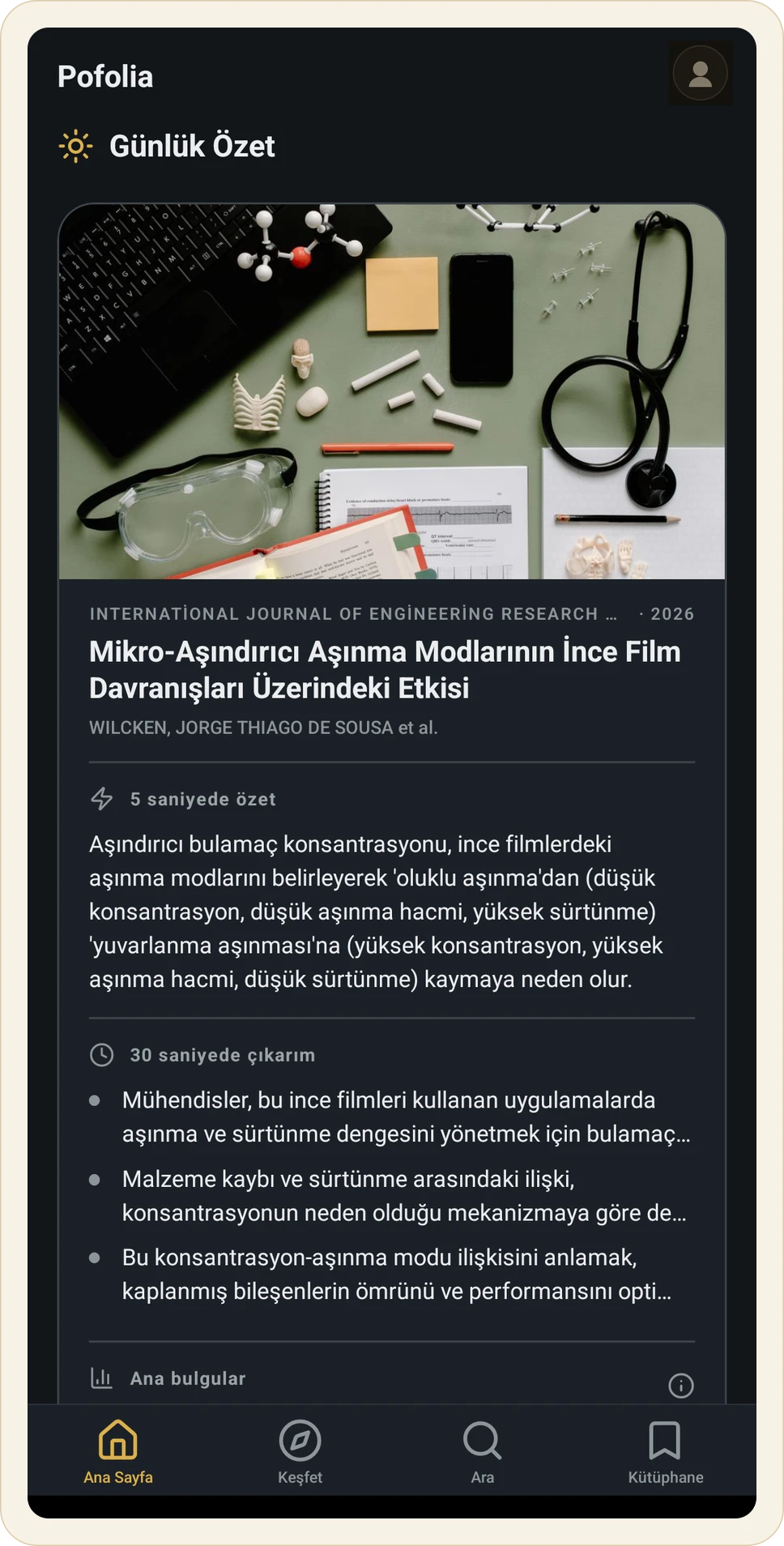
Pofolia daily feed screen
250M+
searchable papers
26
science fields
250+
subfields
Q1–Q4
journal quality signal
MedicineNeuroscienceBiochemistry & GeneticsComputer ScienceEngineeringPhysics & AstronomyChemistryMathematicsPsychologyEnvironmental ScienceMaterials ScienceImmunology & MicrobiologyEarth & Planetary SciencesAgricultural & Biological SciencesEconomics & FinanceSocial SciencesPharmacology & PharmaceuticsEnergyVeterinaryNursingDentistryArts & Humanities
Start of term

Start from whichever desk you sit at

One app, three different jobs. The guides below rest on what the product actually does — and all of it is free.

Student

Find the right ten papers for an assignment in an evening, save them, and take the reference in one tap.

  • Search in a plain sentence: “short video and attention span” is enough; the app builds the operators.
  • APA / Harvard / Vancouver citations ready; 500 papers per list.
How to find papers for an assignment or a thesis

Master’s · PhD

Finish the literature review without sprawl: the field’s cornerstones, the last five years and the contradicting findings in one place.

  • The most-cited papers of every field, with journal quartile and FWCI.
  • Snowball with “similar citations”; a short summary and your own note on every paper.
The literature review in seven steps

Academic

Scan the new papers in your field every morning in 30-second summaries; separate what deserves reading with quality signals.

  • A daily pick by your interests; Q1–Q4 and SJR from SCImago, citations and FWCI from OpenAlex.
  • A summary is the starting point — every card links to the source, and the app says when it does not know.
What is a Q1 journal? Quartiles, SJR and impact factor

All guides →

Three steps

How it works

Pick your interests; we pull the papers in your fields and distill them into 30-second smart summaries — always with a link to the source.

01

Choose your interests

Mark your fields and subfields; your feed is built around them.

02

Get a daily digest

Fresh papers from your fields each day, with an AI summary + citations, journal quartile (Q1–Q4) and impact metrics.

03

Save, read, take notes

Add what you like to your library — synced across phone and web, together with your notes.

Features

Inside the app

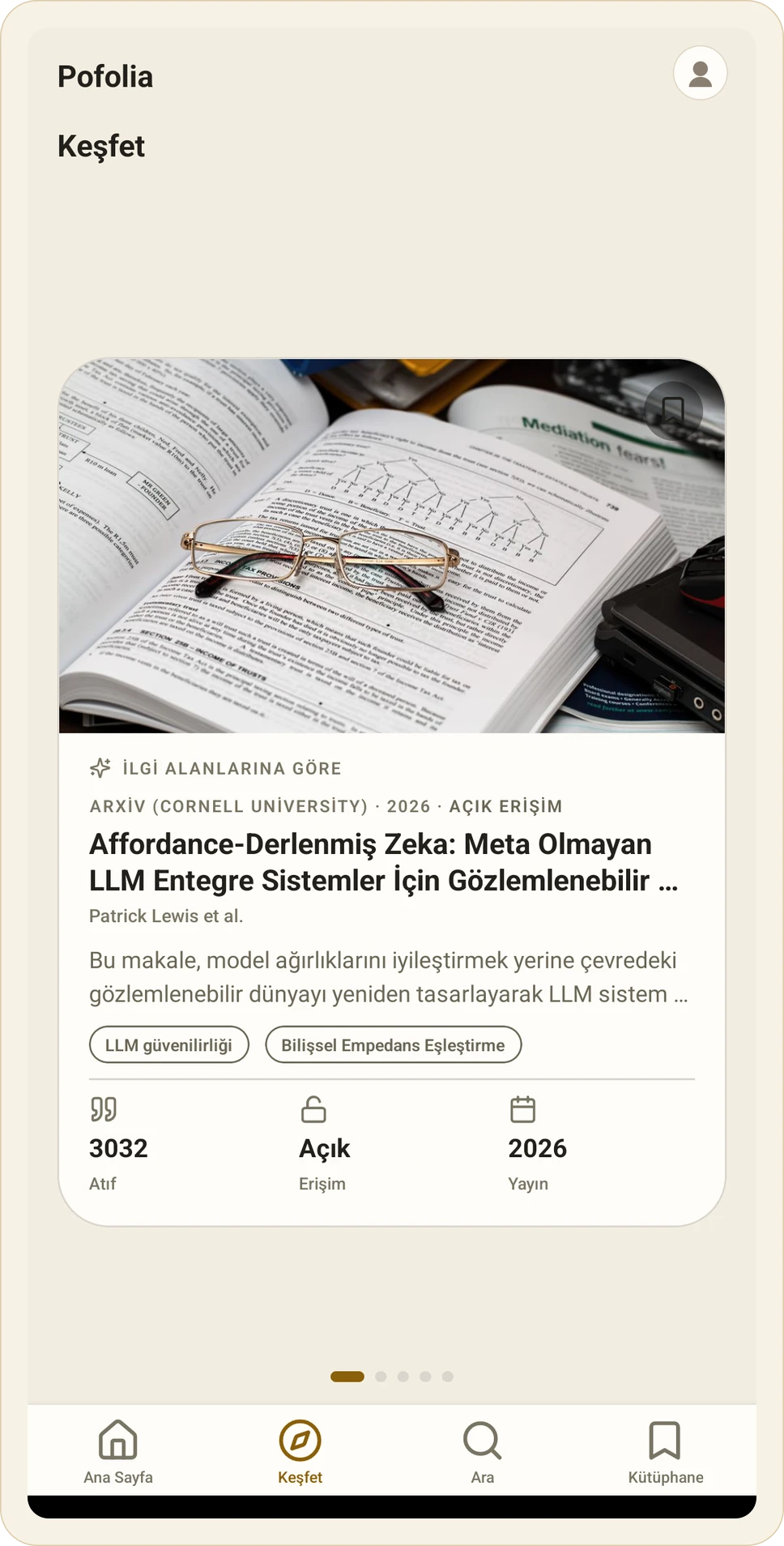
Swipe to explore
01

Swipe to explore

Swipe through the last six months in your fields; swipe right to save. A row of similar papers under every card.

Swipe right to savePersonal to your fields
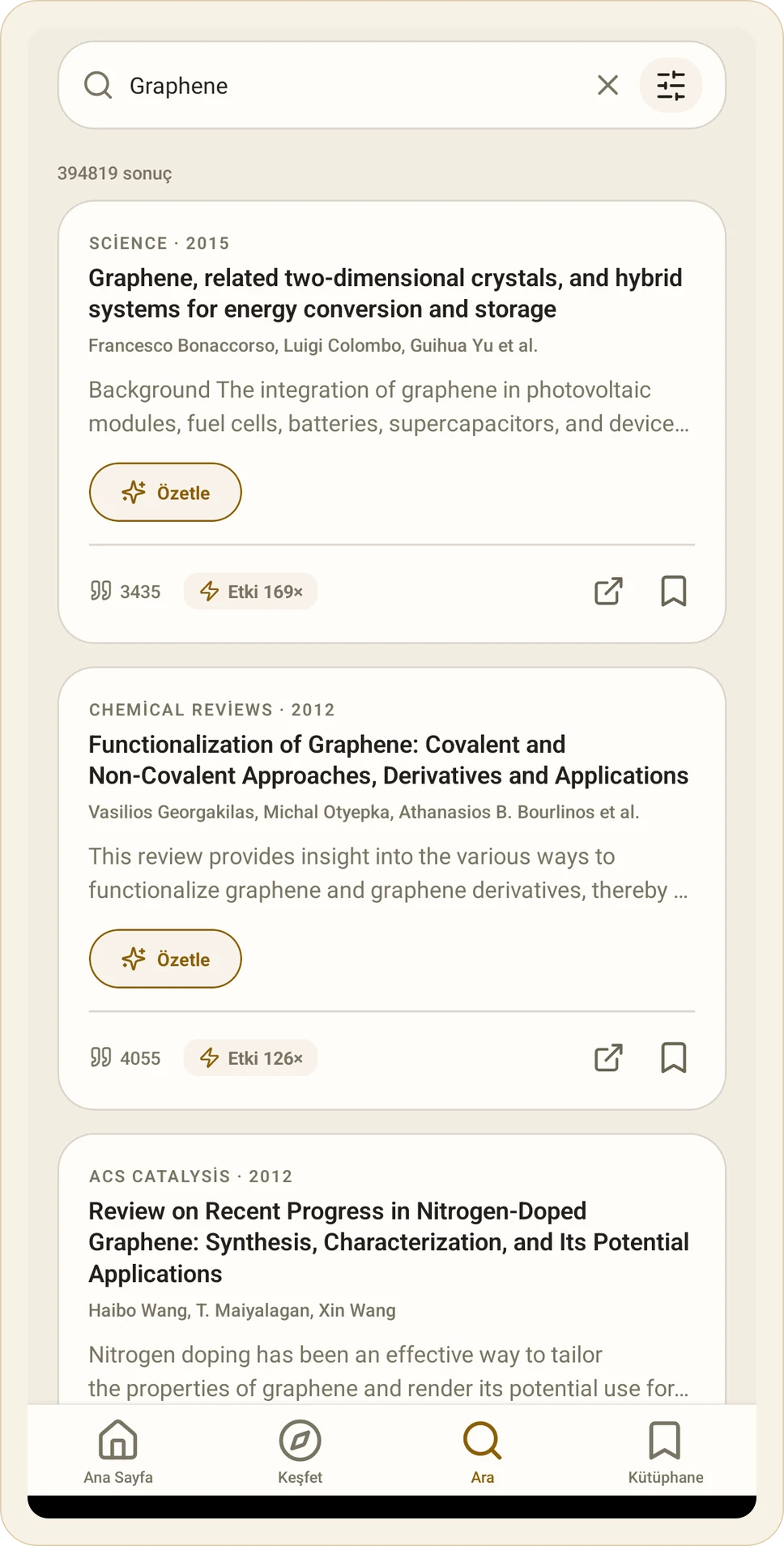
Search millions of papers — even with a sentence
02

Search millions of papers — even with a sentence

Keywords, author, journal; or write what you need as a sentence and let ✨ AI turn it into an academic query. Suggestions as you type, type/citation/journal filters, and “Similar” / “Cited by” hops from every card.

250M+ papers✨ Search with AI
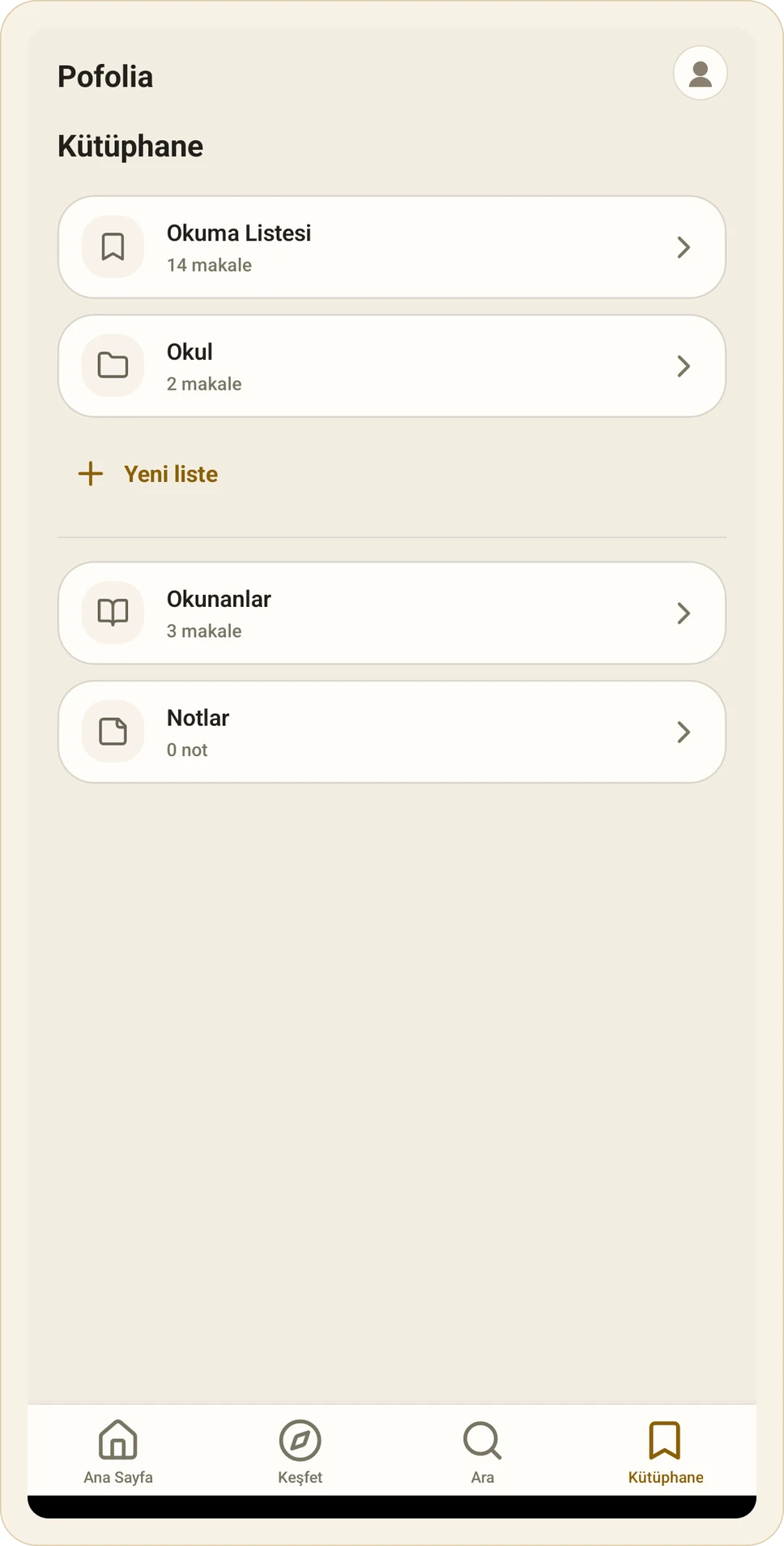
Synced library & notes
03

Synced library & notes

Custom lists, read history and per-paper notes — sort by year, citations, quartile or SJR; the same on phone and web, with one-tap citations.

Phone and web in syncAPA · Harvard · Vancouver
Sample

What does a summary look like?

Not a screenshot — the actual output. The finding first, the detail after.

Nature Medicine · 2024Q11,284 citations

Continuous glucose monitoring in type 2 diabetes: a 12-month multicentre randomised trial

M. Chen, A. Okonkwo, L. Ferreira et al.
Short summary

Continuous glucose monitoring lowered HbA1c by 0.6% on average over 12 months in insulin-treated type 2 diabetes, with the largest benefit in patients starting above 8.5%.

Takeaways
  • Time in target range rose by 2.1 hours a day (n=1,204, p<0.001).
  • Severe hypoglycaemia events fell by a third against the control arm.
  • The benefit plateaued at month 6; device adherence held at 78%.
Every summary links straight to the source — a summary is where you start, not where you stop.
AI

Ask it to search; ask it to answer

Academic search without learning boolean operators; Q&A over a paper without opening it.

✨

Search with AI

Write “effect of intermittent fasting on insulin resistance in diabetics” — the AI turns it into an English academic query with synonym groups; you see what it searched and narrow it with questions.

?

Ask the paper

“What is the methodology? The key finding? The limitations?” — presets that match the paper type, or your own words; for open-access papers the answer comes from the full text, with verbatim quotes; follow-up questions work.

→

Paper to paper

From every result to “Similar papers” and “Cited by”; from an article’s keyword chips to a new search. A literature review in one app.

Honesty rule: every answer says what it rests on — the full text with verbatim quotes for open-access papers, the summary and abstract otherwise; when the information is not there, the app says so.

Quality

The signals that tell you what is worth reading

Three measures on every card, showing where a paper sits in its own field.

Q1

Journal quartile

Where the journal ranks within its own field. Q1 is the top 25%.

FWCI

Field-weighted impact

How the paper’s citations compare with similar work from the same year and field. 1.0 is average.

SJR

Journal prestige

Scimago Journal Rank: weighs citations by the standing of the journal that made them.

Appearance

A theme for every eye

Light, dark or follow the system — synced everywhere.

Pofolia — Light
Light
Pofolia — Dark
Dark
Catalogue

The most-cited papers, field by field

The corpus is organised into 23 fields and 195 subfields. For each one, see the most-cited work with journal quartile and a short summary — no sign-in needed.

See all fields →

Pricing

Start free, go Premium when you’re ready

Everything essential is free. For depth and more, go Premium — 7-day free trial on the monthly plan.

Free
Everything you need to start
  • Personalized daily feed
  • 5 searches and 10 discover swipes a day
  • Search with AI and Ask the paper: 1 a day
  • 10 articles per list, 1 custom list, notes
  • Quality signals (Q1–Q4, citations)
Feature comparison of the Free and Premium plans
FeatureFreePremium
Articles in the daily feed420
Interest fields followed15
Discover swipes (daily)1050
Searches (daily)550
AI-summarise a search result (daily)Not included100
Search with AI (daily)110
Ask the paper (daily)120
Takeaways and key pointsNot includedIncluded
Custom lists110
Articles per list10500
Daily reminder times13
Priority summarisationNot includedIncluded
Notes, library sync and citationsIncludedIncluded
Quality signals (Q1–Q4, FWCI, SJR)IncludedIncluded
Turkish and English summariesIncludedIncluded

These are the real limits in the app. The monthly Premium plan has a 7-day free trial (14 days on the yearly plan in the App Store); cancel before it ends and you are not charged.

About

Pofolia is built by an independent team that wants academic literature to be accessible to everyone. We give you the essence of a paper in seconds, without jargon walls — but always with a link to the source, because a summary is a starting point, not a substitute.

Questions

Frequently asked

Who writes the summaries?

They are generated by AI from the paper’s own abstract and metadata, and every summary links to the source. The point is not to replace the paper but to let you decide in seconds which one to open.

Where do the papers come from?

From OpenAlex, the open catalogue of scholarly work — over 250 million records — with journal quality data from Scimago. Only papers with usable metadata and an abstract are ingested.

What is in the free plan?

The daily personalised feed, search, saving, your library, lists and notes are free. Premium raises the daily volume and the discovery/search limits, and unlocks deep summaries and multiple reminder times.

Are summaries available in Turkish?

Yes. Whatever language the paper is in, the summary is produced in both Turkish and English, and follows the language you set in the app.

What happens to my data?

No ads and no third-party tracking cookies. When a summary is generated, only the paper’s own title and abstract go to the AI — never your identity, your library or your notes. You can delete your account permanently from inside the app or at pofolia.com/account-deletion.
Start researching today

Start free; upgrade to Premium whenever you like.